1 mL serum. Allow SST to clot in an upright position for at least 30 minutes, then centrifuge sample within 2 hours of collection. Transfer serum to a plastic transport tube. Clearly label tube as serum. Freeze. When multiple tests are ordered, submit separate tube for this test.
Alternate Specimen Requirements
1 mL serum from a plain red top tube. Allow sample to clot in an upright position for at least 60 minutes, then centrifuge sample and transfer serum to a plastic transport tube within 2 hours of collection. Clearly label tube as serum from a plain red top tube. Freeze. When multiple tests are ordered, submit separate tube for this test.
Minimum Volume
0.4 mL Serum
Transport Temperature
Frozen
Specimen Stability
1 Day Room Temperature 1 Week Refrigerated 3 Months Frozen
Synonyms
T3 Reverse
T3 Reverse (Triiodothyronine)
Reference Range
Age >=18 Years: 9.0-27.0 ng/dL Age <18 Years: Not Established
Methodology
Liquid Chromatography-Tandem Mass Spectrometry (LC-MS/MS)
Test Setup Days Performed
Monday,Wednesday,Thursday,Friday,Saturday,Sunday AM Shift
Expected Turnaround Time
3-6 Days
CPT and LOINC
84482 Laboratory Developed Test By Sonic Reference Laboratory. LOINC: 3052-8
CPT Codes
84482 Laboratory Developed Test By Sonic Reference Laboratory.
LOINC
3052-8
Additional Information
Reverse triiodothyronine (RT3) is a variant of triiodothyronine (T3) that differs only in the chemical positioning of iodine atoms on the base structure. RT3 is formed via inner-ring deiodination of thyroxine (T4) versus outer-ring deiodination, which forms T3. RT3 is believed to be metabolically inactive as compared to T3. The concentration of RT3 tends to correlate with the free T4 level and is generally low in hypothyroidism and high in hyperthyroidism. Appropriate initial evaluation for a majority of thyroid disorders includes TSH and, if TSH is abnormal, free T4. Testing for RT3 has limited clinical utility, but may be appropriate in certain clinical circumstances, including euthyroid sick syndrome (non-thyroidal illness syndrome), pregnancy, and during treatment with medications that may affect thyroid function.
Performing Lab
Sonic Reference Laboratory Inc.
Ordering
Collect
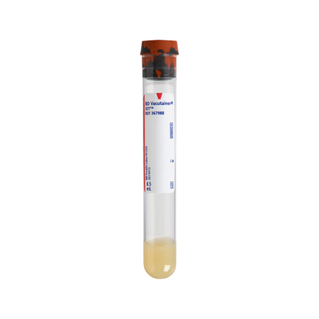
Serum Separator Tube
Preferred Specimen Requirements
1 mL serum. Allow SST to clot in an upright position for at least 30 minutes, then centrifuge sample within 2 hours of collection. Transfer serum to a plastic transport tube. Clearly label tube as serum. Freeze. When multiple tests are ordered, submit separate tube for this test.
Alternate Specimen Requirements
1 mL serum from a plain red top tube. Allow sample to clot in an upright position for at least 60 minutes, then centrifuge sample and transfer serum to a plastic transport tube within 2 hours of collection. Clearly label tube as serum from a plain red top tube. Freeze. When multiple tests are ordered, submit separate tube for this test.
Minimum Volume
0.4 mL Serum
Transport Temperature
Frozen
Specimen Stability
1 Day Room Temperature 1 Week Refrigerated 3 Months Frozen
Synonyms
T3 Reverse
T3 Reverse (Triiodothyronine)
Reference Range
Reference Range
Age >=18 Years: 9.0-27.0 ng/dL Age <18 Years: Not Established
Profile Components
Methodology
Methodology
Liquid Chromatography-Tandem Mass Spectrometry (LC-MS/MS)
Test Setup Days Performed
Test Setup Days Performed
Monday,Wednesday,Thursday,Friday,Saturday,Sunday AM Shift
Expected Turnaround Time
3-6 Days
CPT and LOINC
CPT and LOINC
84482 Laboratory Developed Test By Sonic Reference Laboratory. LOINC: 3052-8
CPT Codes
84482 Laboratory Developed Test By Sonic Reference Laboratory.
LOINC
3052-8
Additional Information
Additional Information
Reverse triiodothyronine (RT3) is a variant of triiodothyronine (T3) that differs only in the chemical positioning of iodine atoms on the base structure. RT3 is formed via inner-ring deiodination of thyroxine (T4) versus outer-ring deiodination, which forms T3. RT3 is believed to be metabolically inactive as compared to T3. The concentration of RT3 tends to correlate with the free T4 level and is generally low in hypothyroidism and high in hyperthyroidism. Appropriate initial evaluation for a majority of thyroid disorders includes TSH and, if TSH is abnormal, free T4. Testing for RT3 has limited clinical utility, but may be appropriate in certain clinical circumstances, including euthyroid sick syndrome (non-thyroidal illness syndrome), pregnancy, and during treatment with medications that may affect thyroid function.

 Serum Separator Tube