Specimen Type: Body fluid, Tissue, Wound (closed abscess, bite wound, deep wound)
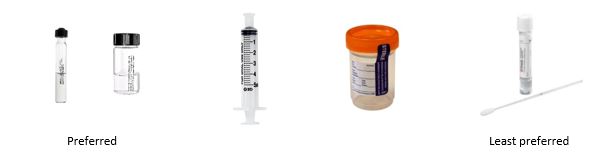
Collection Device: Anaerobic Transport Medium (preferred: jar for tissues, vial for fluids) or capped syringe or sterile container or ESwab (least preferred))
**Gastric or Duodenal Tissue/Biopsy for Helicobacter pylori - acceptable collection/transport devices include sterile container, liquid modified Cary-Blair medium, Brucella broth (20% glycerol, cysteine-albumin broth) or Stuart's storage media
IF SUBMITTING TISSUE/BIOPSY FOR Helicobacter pylori, PLEASE NOTIFY MICROBIOLOGY LABORATORY IN ADVANCE - 317-491-6999
Preferred Draw Volume
2-5 mL of fluid/aspirate or 0.5-1 cm3 piece of tissue (add a small amount of isotonic saline)
Unacceptable Conditions
Red capped Stuart's swab is NOT acceptable for anaerobe culture.
Collection Comments
Biopsy/Tissue specimens for Helicobacter pylori:
Order as Anaerobic Culture + Stain
Include specimen source, add "test for H.pylori" in the comments/on the requisition. If susceptibility testing is needed, please add "Send out for susceptibility testing" in the comments/on the requisition as well.
Storage/Transport Temperature
Transport specimen at room temperature
-ATM: transport within 24 hours
-Capped syringe: transport within two hours
-Sterile container: transport small volume specimens i.e., 1 mL of fluid or <1 cm3, within 15 minutes & larger volumes within 2 hours
-ESwab: within 24 hours
For H. pylori cultures: Transport specimen at room temperature within 4 hours; if >4 hours, maintain specimen at 4°C on ice.
Ordering Recommendations
An Anaerobe CX+Stn (culture and stain) includes both a culture for anaerobic bacteria and a microscopic examination of a Gram-stained smear. An abscess specimen is a collection of pus, which is typically encapsulated, that is formed by an infectious process. Anaerobic bacteria can cause infections when they have access to normally-sterile body fluids, such as pleural and abdominal fluids. A "drain" is a tube a caregiver places to remove pus, blood, or other fluids from a wound. Historically, anaerobic bacteria have been isolated from tissue specimens taken from many different body sites, especially abdominal, thoracic, and central nervous system locations. Anerobic bacteria are frequent causes of wound infections, especially foreign-body and surgical wounds. All anaerobic bacteria that grow in the culture are definitively identified, but antibiotic susceptibility testing (AST) is not routinely performed. Rather, AST is done by request only. This test is ordered when there is a suspicion that the patient may have an infection caused by anerobic bacteria.
Performed
Monday - Sunday; Days
Methodology
Culture, Gram Stain & Identification
Reported
5-10 days
Performing Lab
Microbiology
Synonyms
3050
Anaerobe Culture
Anaerobic Culture + Stain
Culture Anaerobe
Anaerobeic Culture and Gram Stain
Anaerobe CX and stain
Reference Interval
No anaerobic growth
CPT Codes
87075
LOINC Codes
NAME
LOINC
Order
Anaerobic Culture + Stain
635-3
Test Code (Outreach Synonym)
3050
Catalog Code
692445
Collection
Collect
Specimen Type: Body fluid, Tissue, Wound (closed abscess, bite wound, deep wound)
Collection Device: Anaerobic Transport Medium (preferred: jar for tissues, vial for fluids) or capped syringe or sterile container or ESwab (least preferred))
**Gastric or Duodenal Tissue/Biopsy for Helicobacter pylori - acceptable collection/transport devices include sterile container, liquid modified Cary-Blair medium, Brucella broth (20% glycerol, cysteine-albumin broth) or Stuart's storage media
IF SUBMITTING TISSUE/BIOPSY FOR Helicobacter pylori, PLEASE NOTIFY MICROBIOLOGY LABORATORY IN ADVANCE - 317-491-6999
Preferred Draw Volume
2-5 mL of fluid/aspirate or 0.5-1 cm3 piece of tissue (add a small amount of isotonic saline)
Unacceptable Conditions
Red capped Stuart's swab is NOT acceptable for anaerobe culture.
Collection Comments
Biopsy/Tissue specimens for Helicobacter pylori:
Order as Anaerobic Culture + Stain
Include specimen source, add "test for H.pylori" in the comments/on the requisition. If susceptibility testing is needed, please add "Send out for susceptibility testing" in the comments/on the requisition as well.
Storage/Transport Temperature
Transport specimen at room temperature
-ATM: transport within 24 hours
-Capped syringe: transport within two hours
-Sterile container: transport small volume specimens i.e., 1 mL of fluid or <1 cm3, within 15 minutes & larger volumes within 2 hours
-ESwab: within 24 hours
For H. pylori cultures: Transport specimen at room temperature within 4 hours; if >4 hours, maintain specimen at 4°C on ice.
Ordering
Ordering Recommendations
An Anaerobe CX+Stn (culture and stain) includes both a culture for anaerobic bacteria and a microscopic examination of a Gram-stained smear. An abscess specimen is a collection of pus, which is typically encapsulated, that is formed by an infectious process. Anaerobic bacteria can cause infections when they have access to normally-sterile body fluids, such as pleural and abdominal fluids. A "drain" is a tube a caregiver places to remove pus, blood, or other fluids from a wound. Historically, anaerobic bacteria have been isolated from tissue specimens taken from many different body sites, especially abdominal, thoracic, and central nervous system locations. Anerobic bacteria are frequent causes of wound infections, especially foreign-body and surgical wounds. All anaerobic bacteria that grow in the culture are definitively identified, but antibiotic susceptibility testing (AST) is not routinely performed. Rather, AST is done by request only. This test is ordered when there is a suspicion that the patient may have an infection caused by anerobic bacteria.