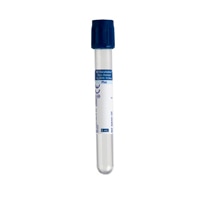
Royal blue top tube (lead-free EDTA-anticoagulated)
Acceptable collection container (lead-free tubes are preferred):
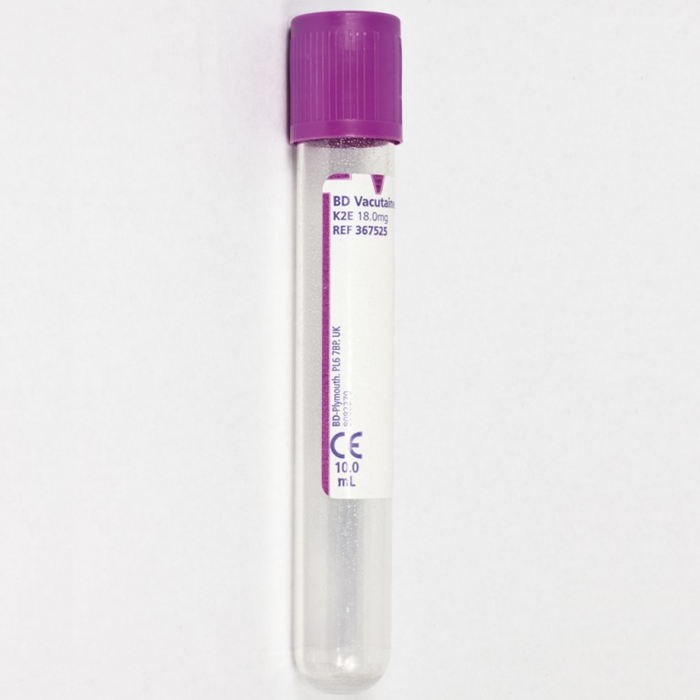
Lavendar top tube (EDTA-anticoagulated)
Storage/Transport Temperature
Room temperature
Stability (from collection to initiation)
Before separation (No centrifugation on tests)
Room Temperature
Indefinetely
Refrigerated (2-8 C)
Indefinetely
Frozen (-20 C)
Not Recommended
Volume Required
2.0 mL blood
Minimum Required
0.2 mL blood
Phlebotomy Draw
Yes
Performing Lab
Chemistry Laboratory
Performed
Weekdays
Methodology
Inductively-coupled plasma mass spectrometry
Reported
Within 2 weekdays
LIS Mnemonic
PBBL
Available STAT
No
Notes
This test is not able to measure lead concentrations < 2.0 ug/dL.
This test was developed and its performance characteristics determined by the Children's Hospital of Philadelphia Clinical Chemistry Laboratory. It has not been cleared or approved by the U.S. Food and Drug Administration (FDA). The FDA has determined that such clearance or approval is not necessary. This test is used for clinical purposes. It should not be regarded as investigational or for research. This laboratory is certified under the Clinical Laboratory Improvement Amendments of 1988 (CLIA-88) as qualified to perform high-complexity clinical laboratory testing.
Reference Ranges
Range (All ages)
Comment
< 3.5 ug/dL
Blood lead level does NOT exceed the upper reference value as determined by the Center for Disease Control (CDC).
3.5 - 9.9 ug/dL
Blood lead level exceeds the upper reference value as determined by the Center for Disease Control (CDC). Follow-up testing is recommended at 3 months. Elevated results from non-certified lead-free tubes may be due to contamination.
10.0 - 19.9 ug/dL
Blood lead level exceeds the upper reference value as determined by the Center for Disease Control (CDC). Follow-up testing is recommended at 1 month. Elevated results from non-certified lead-free tubes may be due to contamination.
20.0 - 44.9 ug/dL
Blood lead level significantly exceeds the upper reference value as determined by the Center for Disease Control (CDC). Follow-up testing is recommended within 2-4 weeks. Elevated results from non-certified lead-free tubes may be due to contamination.
> 45.0 ug/dL
Blood lead level is critically elevated. Referral to the Emergency Department and follow-up testing is recommended as soon as possible. Contact Poison Control (1-800-222-1222) for chelation guidance. Elevated results from non-certified lead-free tubes may be due to contamination.
CPT Codes
83655
Collection
Collect
Preferred collection containers:
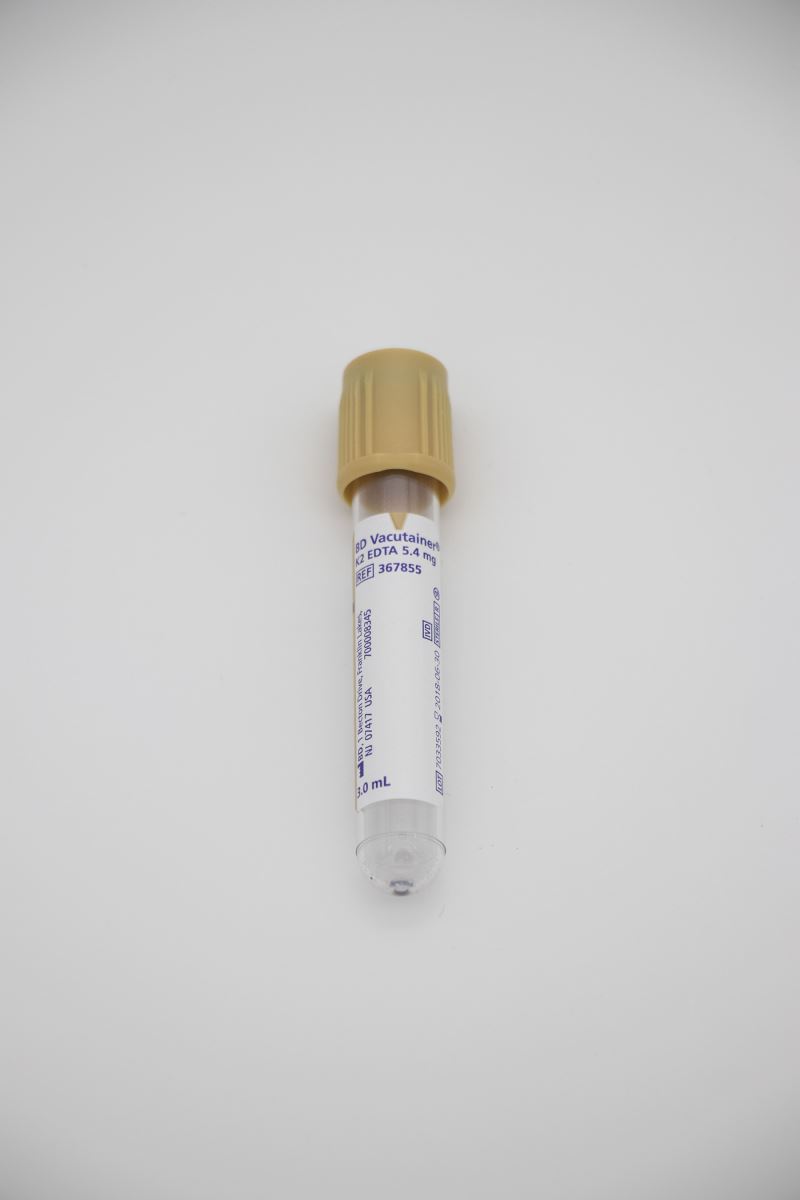
Tan top tube (lead-free EDTA-anticoagulated)
OR
Royal blue top tube (lead-free EDTA-anticoagulated)
Acceptable collection container (lead-free tubes are preferred):
Lavendar top tube (EDTA-anticoagulated)
Storage/Transport Temperature
Room temperature
Stability (from collection to initiation)
Before separation (No centrifugation on tests)
Room Temperature
Indefinetely
Refrigerated (2-8 C)
Indefinetely
Frozen (-20 C)
Not Recommended
Volume Required
2.0 mL blood
Minimum Required
0.2 mL blood
Phlebotomy Draw
Yes
Ordering
Performing Lab
Chemistry Laboratory
Performed
Weekdays
Methodology
Inductively-coupled plasma mass spectrometry
Reported
Within 2 weekdays
LIS Mnemonic
PBBL
Available STAT
No
Result Interpretation
Notes
This test is not able to measure lead concentrations < 2.0 ug/dL.
This test was developed and its performance characteristics determined by the Children's Hospital of Philadelphia Clinical Chemistry Laboratory. It has not been cleared or approved by the U.S. Food and Drug Administration (FDA). The FDA has determined that such clearance or approval is not necessary. This test is used for clinical purposes. It should not be regarded as investigational or for research. This laboratory is certified under the Clinical Laboratory Improvement Amendments of 1988 (CLIA-88) as qualified to perform high-complexity clinical laboratory testing.
Reference Ranges
Range (All ages)
Comment
< 3.5 ug/dL
Blood lead level does NOT exceed the upper reference value as determined by the Center for Disease Control (CDC).
3.5 - 9.9 ug/dL
Blood lead level exceeds the upper reference value as determined by the Center for Disease Control (CDC). Follow-up testing is recommended at 3 months. Elevated results from non-certified lead-free tubes may be due to contamination.
10.0 - 19.9 ug/dL
Blood lead level exceeds the upper reference value as determined by the Center for Disease Control (CDC). Follow-up testing is recommended at 1 month. Elevated results from non-certified lead-free tubes may be due to contamination.
20.0 - 44.9 ug/dL
Blood lead level significantly exceeds the upper reference value as determined by the Center for Disease Control (CDC). Follow-up testing is recommended within 2-4 weeks. Elevated results from non-certified lead-free tubes may be due to contamination.
> 45.0 ug/dL
Blood lead level is critically elevated. Referral to the Emergency Department and follow-up testing is recommended as soon as possible. Contact Poison Control (1-800-222-1222) for chelation guidance. Elevated results from non-certified lead-free tubes may be due to contamination.