The Vaginal Panel Nucleic Acid Test is intended to aid in the diagnosis of vaginal infections in women with a clinical presentation consistent with bacterial vaginosis, vulvovaginal candidiasis and trichomoniasis.
Orderable SIM Number(s)
Vaginal Panel NAT, Amplified
Synonyms
Bacterial vaginosis
vaginitis
Candida
Trichomonas
PCR
Nucleic Acid Amplification Test
BV
Vag NAT
Patient Preparation
Patients should be counseled to refrain from intercourse for at least 24 hours before the collection of swab specimens and to refrain from douching, using tampons, or using intravaginal medication for at least 48 hours before the collection of swab specimens.
Collect
Source
Vaginal swab - clinician or patient collected
Endocervical swab clinician or patient collected
Specimen Type/Collection Kit
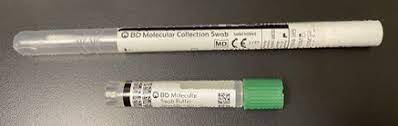
BD Molecular Swab Collection Kit (available from ARL)
Sterile polyester swab with a scored shaft in a sheath
Whenever possible, do not use lubricant for the collection of the vaginal swab.
If lubricant must be used, lubricant should be used sparingly and applied only to the exterior sides of the speculum blades, avoiding contact with the tip of the speculum. Avoid touching the lubricant with the swab during the collection.
If a vaginal exam, in addition to the swab collection, needs to be performed with a commerical lubricant, collect the vaginal swab before the exam.
Storage/Transport Temperature
Transport swabs in the sample buffer tube at ambient temperature.
Unacceptable Conditions
Swabs not in the sample buffer tube.
Frozen swabs
Lubricated swabs
Stability (from collection to initiation)
Swabs should be placed in the sample buffer tube immediately and must be placed in the SBT within 2 hours of collection.
Swabs in a sample buffer tube can be stored at 2-30°C for 21 days before testing
Swabs in sample buffer tube can be stored upright for 2-30°C for 4 days after testing.
Special Handling Instructions
Swabs should be placed in the sample buffer tube immediately and must be placed in the SBT within 2 hours of collection.
Remarks
Whenever possible, do not use lubricant for the collection of the vaginal swab.
Reference Interval
Bacterial Vaginosis: Negative or Positive
Candida group: Negative or Positive
Candida glabrata: Negative or Positive
Candida krusei: Negative or Positive
Trichomonas vaginalis: Negative or Positive
Interpretive Data
The Vaginal Panel Nucleic Acid Tets is an automated qualitative in vitro diagnostic test for the direct detection of DNA targets from bacteria associated with bacterial vaginosis (qualitative results reported based on detection and quantitation of targeted organism markers), Candida species associated with vulvovaginal candidiasis, and Trichomonas vaginalis from vaginal swabs in patients who are symptomatic for vaginitis/vaginosis. The test utilizes real-time polymerase chain reaction (PCR) for the amplification of specific DNA targets and utilizes fluorogenic target-specific hybridization probes to detect and differentiate DNA from:
Bacterial vaginosis markers (Individual markers not reported)
Candida spp. (C. albicans, C. tropicalis, C. parapsilosis, C. dubliniensis)
Candida glabrata
Candida krusei
Trichomonas vaginalis
Notes
Patients under 18 years old were not evaluated.
This test cannot be used to assess therapeutic success or failure since target nucleic acids may persist following antimicrobial therapy.
CPT Codes
81514
Overview
Ordering Recommendations
The Vaginal Panel Nucleic Acid Test is intended to aid in the diagnosis of vaginal infections in women with a clinical presentation consistent with bacterial vaginosis, vulvovaginal candidiasis and trichomoniasis.
Orderable SIM Number(s)
Vaginal Panel NAT, Amplified
Synonyms
Bacterial vaginosis
vaginitis
Candida
Trichomonas
PCR
Nucleic Acid Amplification Test
BV
Vag NAT
Specimen
Patient Preparation
Patients should be counseled to refrain from intercourse for at least 24 hours before the collection of swab specimens and to refrain from douching, using tampons, or using intravaginal medication for at least 48 hours before the collection of swab specimens.
Collect
Source
Vaginal swab - clinician or patient collected
Endocervical swab clinician or patient collected
Specimen Type/Collection Kit
BD Molecular Swab Collection Kit (available from ARL)
Sterile polyester swab with a scored shaft in a sheath
Whenever possible, do not use lubricant for the collection of the vaginal swab.
If lubricant must be used, lubricant should be used sparingly and applied only to the exterior sides of the speculum blades, avoiding contact with the tip of the speculum. Avoid touching the lubricant with the swab during the collection.
If a vaginal exam, in addition to the swab collection, needs to be performed with a commerical lubricant, collect the vaginal swab before the exam.
Storage/Transport Temperature
Transport swabs in the sample buffer tube at ambient temperature.
Unacceptable Conditions
Swabs not in the sample buffer tube.
Frozen swabs
Lubricated swabs
Stability (from collection to initiation)
Swabs should be placed in the sample buffer tube immediately and must be placed in the SBT within 2 hours of collection.
Swabs in a sample buffer tube can be stored at 2-30°C for 21 days before testing
Swabs in sample buffer tube can be stored upright for 2-30°C for 4 days after testing.
Special Handling Instructions
Swabs should be placed in the sample buffer tube immediately and must be placed in the SBT within 2 hours of collection.
Remarks
Whenever possible, do not use lubricant for the collection of the vaginal swab.
Interpretive
Reference Interval
Bacterial Vaginosis: Negative or Positive
Candida group: Negative or Positive
Candida glabrata: Negative or Positive
Candida krusei: Negative or Positive
Trichomonas vaginalis: Negative or Positive
Interpretive Data
The Vaginal Panel Nucleic Acid Tets is an automated qualitative in vitro diagnostic test for the direct detection of DNA targets from bacteria associated with bacterial vaginosis (qualitative results reported based on detection and quantitation of targeted organism markers), Candida species associated with vulvovaginal candidiasis, and Trichomonas vaginalis from vaginal swabs in patients who are symptomatic for vaginitis/vaginosis. The test utilizes real-time polymerase chain reaction (PCR) for the amplification of specific DNA targets and utilizes fluorogenic target-specific hybridization probes to detect and differentiate DNA from:
Bacterial vaginosis markers (Individual markers not reported)