MRSA by PCR is a qualitative test for the direct detection of nasal colonization by methicillin-resistant Staphylococcus aureus (MRSA) to aid in the prevention and control of MRSA infections in health care settings and for de-escalation of antibiotics in patients presenting with pneumonia.
Patient Preparation
Patient should be off antibiotics at least 72 hours prior to specimen collection.
Collect
Preferred specimen:
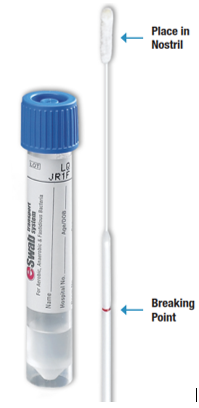
Eswab: Collect the nasal specimen by sampling both nares one at a time with the same Eswab. Refer to Specimen Collection Guide.
Also acceptable:
Red top swab (COPAN with sponge): Remove cap from red top swab and insert both swabs into the patient's nostril (the swab tip must be inserted up to 1 inch from the edge of the nares). Roll the swab five times. Insert the same swabs into the second nostril and repeat sampling.
Specimen Container
Preferred: Eswab
Also acceptable: Red top swab (COPAN with sponge)
Pediatric Collection
NICU patients: Use Eswab with mini-tip swab for collection.
Eswab: Collect the nasal specimen by sampling both nares one at a time with the same Eswab.
MRSA by PCR is a qualitative test for the direct detection of nasal colonization by methicillin-resistant Staphylococcus aureus (MRSA) to aid in the prevention and control of MRSA infections in health care settings and for de-escalation of antibiotics in patients presenting with pneumonia.
EPIC Order Code
LAB3969
Sunquest Code
MRSAPC
Synonyms
LAB3969
MRSA Screen
MRSA PCR
Screen, MRSA
CPT Codes
87641
LOINC
72887-3
Reference Interval
Not Detected
Interpretive Data
MRSA by PCR is not intended to diagnose MRSA infections nor to guide or monitor treatment for MRSA infections.
Negative nasal MRSA PCR has a high negative predictive value for MRSA pneumonia. Consider stopping Vancomycin if no other clinical indication. Contact Antimicrobial Stewardship or Infectious Diseases for further recommendations.
Collection
Ordering Recommendations
MRSA by PCR is a qualitative test for the direct detection of nasal colonization by methicillin-resistant Staphylococcus aureus (MRSA) to aid in the prevention and control of MRSA infections in health care settings and for de-escalation of antibiotics in patients presenting with pneumonia.
Patient Preparation
Patient should be off antibiotics at least 72 hours prior to specimen collection.
Collect
Preferred specimen:
Eswab: Collect the nasal specimen by sampling both nares one at a time with the same Eswab. Refer to Specimen Collection Guide.
Also acceptable:
Red top swab (COPAN with sponge): Remove cap from red top swab and insert both swabs into the patient's nostril (the swab tip must be inserted up to 1 inch from the edge of the nares). Roll the swab five times. Insert the same swabs into the second nostril and repeat sampling.
Specimen Container
Preferred: Eswab
Also acceptable: Red top swab (COPAN with sponge)
Pediatric Collection
NICU patients: Use Eswab with mini-tip swab for collection.
Eswab: Collect the nasal specimen by sampling both nares one at a time with the same Eswab.
MRSA by PCR is a qualitative test for the direct detection of nasal colonization by methicillin-resistant Staphylococcus aureus (MRSA) to aid in the prevention and control of MRSA infections in health care settings and for de-escalation of antibiotics in patients presenting with pneumonia.
EPIC Order Code
LAB3969
Sunquest Code
MRSAPC
Synonyms
LAB3969
MRSA Screen
MRSA PCR
Screen, MRSA
Fees & Codes
CPT Codes
87641
LOINC
72887-3
Clinical & Interpretive
Reference Interval
Not Detected
Interpretive Data
MRSA by PCR is not intended to diagnose MRSA infections nor to guide or monitor treatment for MRSA infections.
Negative nasal MRSA PCR has a high negative predictive value for MRSA pneumonia. Consider stopping Vancomycin if no other clinical indication. Contact Antimicrobial Stewardship or Infectious Diseases for further recommendations.

.png)