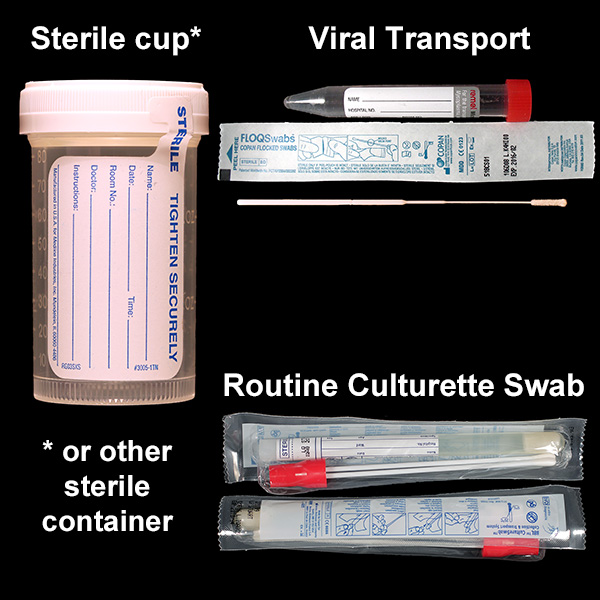
Genital; Swab (Culturette Swab) Body Fluid; Black Screw Respiratory, Tissue, Urine; Sterile Cup
Preferred Draw Volume
Swab: 1 swab Body fluid: 2 mL Respiratory: 2 mL Urine: 10 mL or entire specimen Tissue: 5 mm3
Minimum Draw Volume
Body fluid: 1 mL Respiratory: 1 mL
Other Acceptable Containers
Swabs Only: M4, M4-RT, M5, M6, Universal Transport Media (UTM), or Eswab
Synovial Fluid Only: Lavender, Pink, Royal blue, Sterile vial containing EDTA-derived aliquot, or Red Top (NOTE: Send specimen in original tube)
Unacceptable Conditions
Cotton or calcium alginate-tipped swab, wooden shaft swab, transport swab containing gel or charcoal Formalin-fixed and/or paraffin-embedded tissues, Port-a-Cul tube Anaerobic fluid vials Dry swab (no pledget or sponge) Bone marrow Decalcified bone Slides Respiratory fluid specimens placed in viral transport medium (M4-RT, M4, or M5) Body fluid specimens placed in viral transport medium (M4-RT, M4, or M5)
Collection Comments
There are multiple sample types accepted. Specimen source is required. See Mayo webpage for complete instructions: Mayo collection information.
Vaginal: Collect specimen by swabbing back and forth over mucosa surface to maximize recovery of cells. Place swab back into swab cylinder. Urethra or cervical: Collect specimen by inserting swab 1 to 3 cm and rotating 360 degrees. Place swab back into swab cylinder. Body Fluid: Sources may include: Pelvic, Peritoneal, Amniotic, Prostatic secretions, Semen, Reproductive drainage or fluid, Pleural/chest, Chest tube, Pericardial fluid, or Synovial fluid Respiratory: Sources may include: Sputum, tracheal secretions, bronchial washings, bronchoalveolar lavage, lung or nasal washings. (NOTE: Nasal washings may only be submitted for infants <3 months of age). Urine: Urine first void: Specimen can be collected at any time during the day. The patient should not have urinated for at least 1 hour prior to specimen collection. The first voided protion is the initial 20 to 30 mL of the urine stream obtained without cleaning the external urethra. Tissue: Sources may include: Placenta, products of conception, urogenital, respiratory, bronchus, chest/mediastinal, bone, spine. or joint. Collect fresh tissue specimen. Submit frsh tissue only, do not add fluid to tissue. Refrigerate or freeze specimen.
Storage/Transport Temperature
Refrigerated
Stability (from collection to initiation)
Refrigerated or Frozen: 7 days
Ordering Recommendations
Ureaplasma species, PCR is useful for rapid, sensitive, and specific identification of Ureaplasma urealyticum and Ureaplasma parvum from genitourinary, reproductive, and neonatal respiratory sources.
Genital; Swab (Culturette Swab) Body Fluid; Black Screw Respiratory, Tissue, Urine; Sterile Cup
Preferred Draw Volume
Swab: 1 swab Body fluid: 2 mL Respiratory: 2 mL Urine: 10 mL or entire specimen Tissue: 5 mm3
Minimum Draw Volume
Body fluid: 1 mL Respiratory: 1 mL
Other Acceptable Containers
Swabs Only: M4, M4-RT, M5, M6, Universal Transport Media (UTM), or Eswab
Synovial Fluid Only: Lavender, Pink, Royal blue, Sterile vial containing EDTA-derived aliquot, or Red Top (NOTE: Send specimen in original tube)
Unacceptable Conditions
Cotton or calcium alginate-tipped swab, wooden shaft swab, transport swab containing gel or charcoal Formalin-fixed and/or paraffin-embedded tissues, Port-a-Cul tube Anaerobic fluid vials Dry swab (no pledget or sponge) Bone marrow Decalcified bone Slides Respiratory fluid specimens placed in viral transport medium (M4-RT, M4, or M5) Body fluid specimens placed in viral transport medium (M4-RT, M4, or M5)
Collection Comments
There are multiple sample types accepted. Specimen source is required. See Mayo webpage for complete instructions: Mayo collection information.
Vaginal: Collect specimen by swabbing back and forth over mucosa surface to maximize recovery of cells. Place swab back into swab cylinder. Urethra or cervical: Collect specimen by inserting swab 1 to 3 cm and rotating 360 degrees. Place swab back into swab cylinder. Body Fluid: Sources may include: Pelvic, Peritoneal, Amniotic, Prostatic secretions, Semen, Reproductive drainage or fluid, Pleural/chest, Chest tube, Pericardial fluid, or Synovial fluid Respiratory: Sources may include: Sputum, tracheal secretions, bronchial washings, bronchoalveolar lavage, lung or nasal washings. (NOTE: Nasal washings may only be submitted for infants <3 months of age). Urine: Urine first void: Specimen can be collected at any time during the day. The patient should not have urinated for at least 1 hour prior to specimen collection. The first voided protion is the initial 20 to 30 mL of the urine stream obtained without cleaning the external urethra. Tissue: Sources may include: Placenta, products of conception, urogenital, respiratory, bronchus, chest/mediastinal, bone, spine. or joint. Collect fresh tissue specimen. Submit frsh tissue only, do not add fluid to tissue. Refrigerate or freeze specimen.
Storage/Transport Temperature
Refrigerated
Stability (from collection to initiation)
Refrigerated or Frozen: 7 days
Ordering
Ordering Recommendations
Ureaplasma species, PCR is useful for rapid, sensitive, and specific identification of Ureaplasma urealyticum and Ureaplasma parvum from genitourinary, reproductive, and neonatal respiratory sources.