Specimen Type: Superficial wound - refers to wounds involving epidermis and/or dermis that may result after damage to intact skin. Examples include abrasions, minor burns, cuts that may manifest folliculitis, furuncles, carbuncles/boils, superficial abscesses or superficial cellulitis.
Deep wound - refers to wounds involving deeper structures (i.e. subcutaneous soft tissue/fat, fascia, muscle). Examples include severe burns, surgical incisions, traumatic injuries (e.g. gunshots, stabs, and other penetrating injuries/punctures), ulcers, deep abscesses, cellulitis or bites. A deep abscess may be closed (undrained) or open (draining).
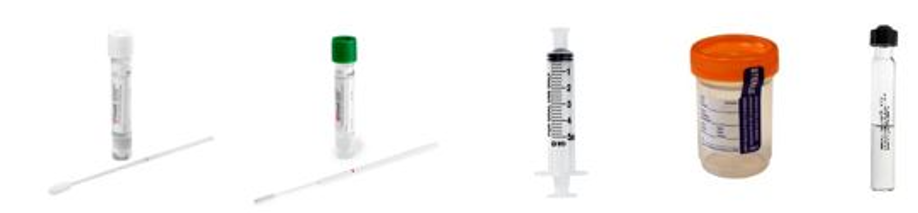
Collection Device: Capped syringe, Sterile Container, Anaerobic Transport Medium, ESwabs
NOTE: Tissue is the best specimen type for optimal organism isolation, followed by aspirated material. Swab specimens are the least preferred and should be avoided if possible.
Preferred Draw Volume
Aspirate: 2-5 mL Tissue: 0.5-1 cm3 piece of tissue (add a small amount of non-bacteriostatic saline, if needed)
Unacceptable Conditions
Nonsterile or leading containers, dry material or dry swabs Specimens that have been improperly collected, stored, or transported Specimens submitted in formalin or other fixative Specimens collected in tissue paper or other non-sterile material Specimen received outside of stability window Unlabeled or mislabeled specimens
Collection Comments
Failure to remove superficial contaminating/colonizing bacteria through proper decontamination of sample site prior to specimen collection yields misleading results of culture.
Culture of dry/crusted lesion or culture of superficial draining pus or exudate is not recommended.
Storage/Transport Temperature
Transport specimen at room temperature within 24 hours.
Anaerobic culture work up is performed on deep wounds only if specimens are collected/transported in appropriate anaerobic transport conditions. These include: -ATM vial: transport within 24 hours -Capped syringe: transport within 2 hours -Sterile container: transport small volume specimens (i.e. 1 mL fluid or <1 cm3) within 15 minutes, larger volumes within 2 hours -ESwab: within 24 hours
Ordering Recommendations
Specimen Type and Body Site must be included as part of the order in Cerner or manual requisition.
Specimen Type: Superficial wound - refers to wounds involving epidermis and/or dermis that may result after damage to intact skin. Examples include abrasions, minor burns, cuts that may manifest folliculitis, furuncles, carbuncles/boils, superficial abscesses or superficial cellulitis.
Deep wound - refers to wounds involving deeper structures (i.e. subcutaneous soft tissue/fat, fascia, muscle). Examples include severe burns, surgical incisions, traumatic injuries (e.g. gunshots, stabs, and other penetrating injuries/punctures), ulcers, deep abscesses, cellulitis or bites. A deep abscess may be closed (undrained) or open (draining).
Collection Device: Capped syringe, Sterile Container, Anaerobic Transport Medium, ESwabs
NOTE: Tissue is the best specimen type for optimal organism isolation, followed by aspirated material. Swab specimens are the least preferred and should be avoided if possible.
Preferred Draw Volume
Aspirate: 2-5 mL Tissue: 0.5-1 cm3 piece of tissue (add a small amount of non-bacteriostatic saline, if needed)
Unacceptable Conditions
Nonsterile or leading containers, dry material or dry swabs Specimens that have been improperly collected, stored, or transported Specimens submitted in formalin or other fixative Specimens collected in tissue paper or other non-sterile material Specimen received outside of stability window Unlabeled or mislabeled specimens
Collection Comments
Failure to remove superficial contaminating/colonizing bacteria through proper decontamination of sample site prior to specimen collection yields misleading results of culture.
Culture of dry/crusted lesion or culture of superficial draining pus or exudate is not recommended.
Storage/Transport Temperature
Transport specimen at room temperature within 24 hours.
Anaerobic culture work up is performed on deep wounds only if specimens are collected/transported in appropriate anaerobic transport conditions. These include: -ATM vial: transport within 24 hours -Capped syringe: transport within 2 hours -Sterile container: transport small volume specimens (i.e. 1 mL fluid or <1 cm3) within 15 minutes, larger volumes within 2 hours -ESwab: within 24 hours
Ordering
Ordering Recommendations
Specimen Type and Body Site must be included as part of the order in Cerner or manual requisition.