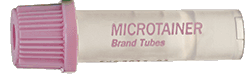
Invert microtainer 10 times after collection. Do Not Spin. Please transport in collection container at transport temperature.
Storage/Transport Temperature
Room Temperature or Refrigerated
Stability (from collection to initiation)
Refrigerated or Room Temperature: 34 days
Performed
Monday - Friday
Methodology
Quantitative Inductively Coupled Plasma - Mass Spectrometry
Reported
2-4 days
Performing Lab
Chemistry
Synonyms
12031
Reference Interval
<3.5 mCg/dL
Clinical Interpretation
Lead is a heavy metal naturally found in the environment that can be an acute and chronic toxin. No safe blood lead level in children has been identified. Adult Blood Lead Epidemiology and Surveillance (ABLES) uses 5mCg/dL to indicate elevated blood lead level for surveillance purposes. Lead exposure can affect nearly every system in the body. Because lead exposure often occurs with no obvious symptoms, it frequently goes unrecognized. The current reference level at which the CDC recommends public health actions be initiated is 3.5 mCg/dL in patients 0 to 5 years old and 5 mCg/dL for patients 6 years and older. Elevated capillary blood levels must be confirmed with a venous lead blood test since capillary blood collection may be more susceptible to contamination.
Invert microtainer 10 times after collection. Do Not Spin. Please transport in collection container at transport temperature.
Storage/Transport Temperature
Room Temperature or Refrigerated
Stability (from collection to initiation)
Refrigerated or Room Temperature: 34 days
Ordering
Performed
Monday - Friday
Methodology
Quantitative Inductively Coupled Plasma - Mass Spectrometry
Reported
2-4 days
Performing Lab
Chemistry
Synonyms
12031
Result Interpretation
Reference Interval
<3.5 mCg/dL
Clinical Interpretation
Lead is a heavy metal naturally found in the environment that can be an acute and chronic toxin. No safe blood lead level in children has been identified. Adult Blood Lead Epidemiology and Surveillance (ABLES) uses 5mCg/dL to indicate elevated blood lead level for surveillance purposes. Lead exposure can affect nearly every system in the body. Because lead exposure often occurs with no obvious symptoms, it frequently goes unrecognized. The current reference level at which the CDC recommends public health actions be initiated is 3.5 mCg/dL in patients 0 to 5 years old and 5 mCg/dL for patients 6 years and older. Elevated capillary blood levels must be confirmed with a venous lead blood test since capillary blood collection may be more susceptible to contamination.